


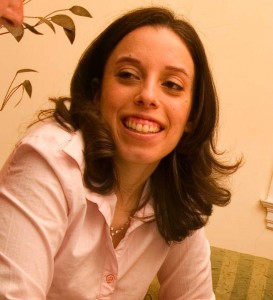
 Over the past several months, since moving out of Moishe House Boston and becoming a congregational rabbi, I’ve been thinking about the Moishe House community that I have made my home for the past 6 years, and what makes it so special. There are amazing people and inspiring programs, but for me, the piece that I am most drawn to and most proud of is the way that our community welcomes new people, figures out what they are good at, and then empowers them to be leaders who create the kind of programming that is meaningful to them, which, in turn, invests them more deeply in the community.
In this model, instead of the housemates doing all the work ourselves, the “resident organizers” serve as guides, cheerleaders, mentors, and accountants/quality control to our participant-leaders, who work with each other on various teams like Shabbat and Holidays, Arts, and the Social Justice Coordinating Committee.
At one resident retreat a few years ago, when my housemates and I described our model and how it led us to have more programs and participation, a resident from another city said, “We could never do that. The people who come to our house aren’t leaders, like the kind you have in Boston.” On the one hand, I found this frustrating, since our people weren’t really leaders until we gave them the opportunity to be. On the other hand, it woke me up to the fact that there is a huge opportunity for Moisheniks – residents, alumni, and participants – to get organizing training, so that they can empower their participants to become leaders and strengthen their programming by letting it emerge from the community.
Now, in service of that goal, in addition to my congregation, I am working part-time at JOIN for Justice, and helping them to plan the Summit in NYC on April 29th and 30th. The training will bring together clergy, Jewish social justice professionals, and young adult Jewish leaders to connect with each other, learn organizing skills, and explore how we can collaborate to strengthen our collective work. Moishe House is a cosponsor, and we will be running several workshops geared to Moishe House people to help people develop organizing skills, explore what it means to build young adult Jewish power, and think about how to incorporate organizing and more intensive social justice work into our Moishe Houses and other ventures.
So, I want to invite you to please come, and please help spread the word! Moishe House will give generous scholarships to anyone who wants to go. If you think you might be interested or if you have suggestions of people I should contact, please email me.
This piece originally appeared in Aluminary, a publication of Moishe House.
Rabbi Margie Klein is one of America’s leading young Jewish voices. In addition to her work at JOIN as the Interim Director of the Jewish Organizing Fellowship, she serves as rabbi of Congregation Sha’arei Shalom in Ashland, and is the founder and a board member of Moishe Kavod House in Brookline, a community of 600 Jews in their 20s and 30s dedicated to Tikkun Olam, the repair of the world.
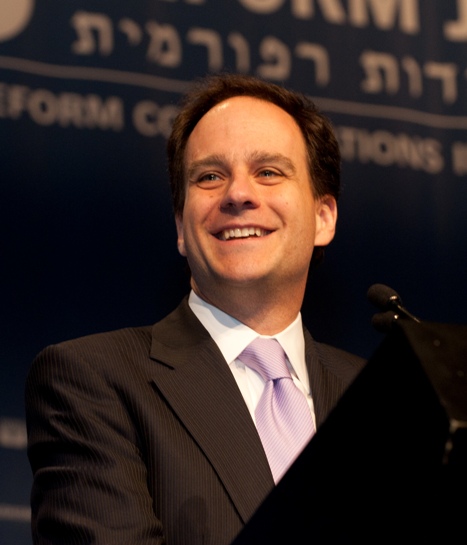
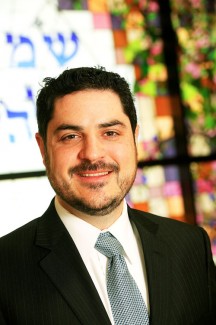
 Seminary Leadership Project alumnus Rabbi Aaron Finkelstein was ordained by Yeshivat Chovevei Torah last spring. Rabbi Finkelstein founded the Prospect Heights Shul, the only Modern Orthodox synagogue between Flatbush and the Lower East Side. According to a 2002 UJA-Federation study, this area is home to over 25,000 Jews. There are many Jewish cultural organizations and other synagogues in that area, largely led by Chabad rabbis, but no Modern Orthodox synagogues. So far, the Prospect Heights Shul is a synagogue without a home. Service locations each week are announced on the synagogue’s website and facebook group. Currently, the synagogue is searching for a permanent home where members can fill their spiritual needs, which include a combination of Jewish law and social action.


